|
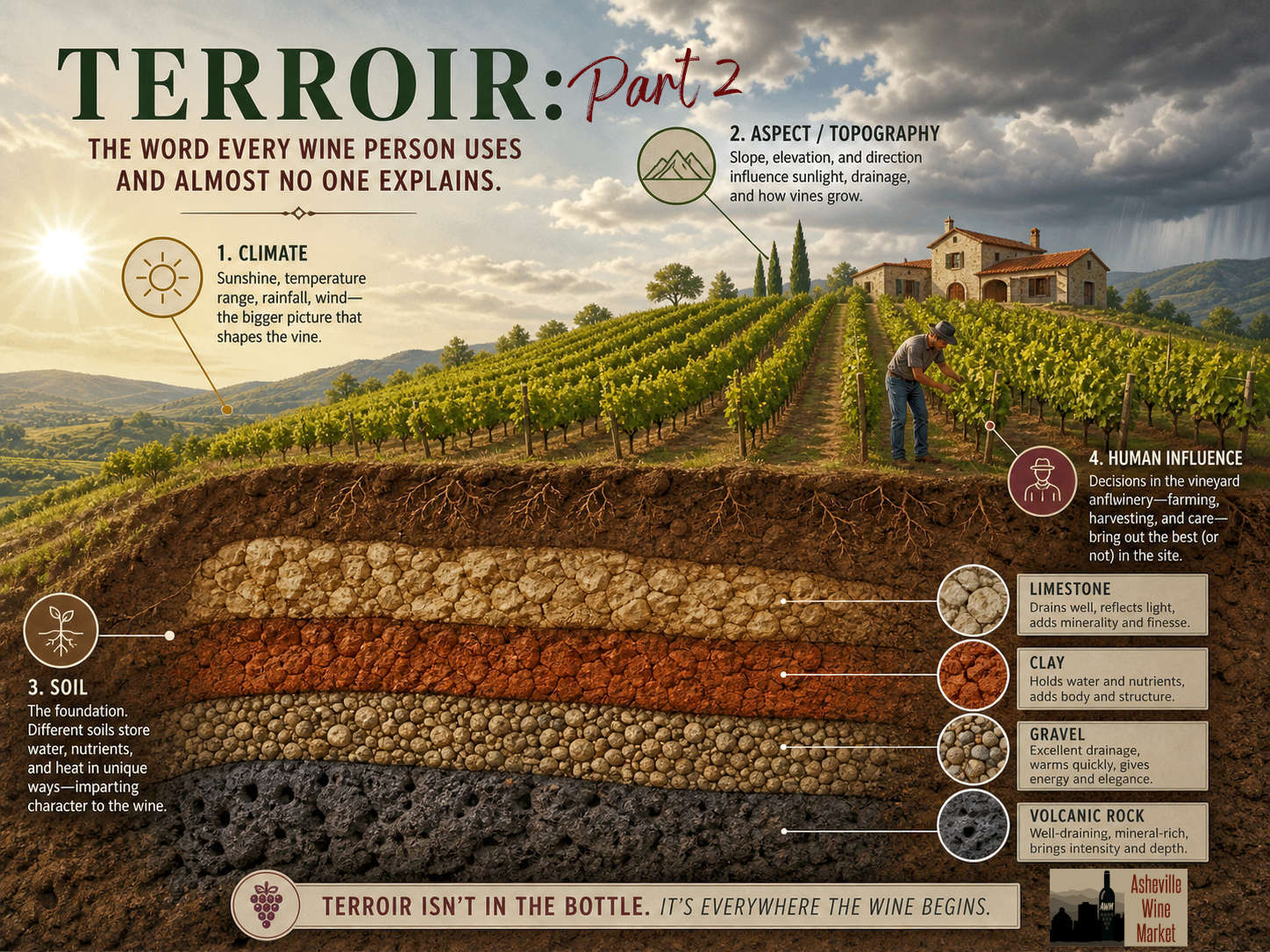
Last week, we started with the two parts of terroir most people think of first: soil and climate. Soil shapes how a vine finds water and nutrients. Climate determines how quickly or slowly grapes ripen, how much acidity they retain, and the alcohol level of the finished wine. Terroir doesn’t end there. Two nearby vineyards can share the same climate and soil yet still produce wines that are noticeably different. Read Part One here... This week, we’ll look at the next two elements of terroir: aspect and topography, and the human hand. Aspect and topography encompass everything related to the vineyard's physical position: which direction it faces, the slope, the elevation, and how wind and water move across it. The human hand is a bit more complicated. Countless decisions are made by the vigneron that either reveal the character of a place or obscure it. |
|
Element Three: Aspect and Topography Elevation adds another piece to the terroir puzzle. Higher altitude means cooler nights, even in warm climates. Cool nights help slow the ripening process and allow grapes to hold onto their natural acidity and aromatic compounds, even as daytime heat builds sugar and richness. This is the secret behind some of the world's most elegant wines from places seemingly inhospitable to viticulture. The high-plateau vineyards of Mendoza in Argentina, the mountain vineyards of Priorat in Spain, or the elevated sub-regions of Portugal's Douro Valley are all prime examples. The angle of a slope also affects how quickly water drains after rain and how much heat the soil retains overnight. Every degree of incline is a small yet perceptible adjustment in the vineyard’s growing conditions. Element Four: The Human Hand I lean toward a more modern reading of terroir. Think of it this way: a vigneron who farms organically and avoids synthetic herbicides and pesticides is protecting the biological life of the soil. That choice reshapes the local ecosystem and all the subtle forces that help translate place into the vine. The same goes for a winemaker who picks early to preserve acidity and freshness, or one who favors neutral vessels over heavily toasted new oak. These decisions may not be “terroir” in the old-school, strictly passive sense, but they determine whether terroir is revealed or obscured. The French have a word for the person who occupies this role, and, coincidentally, I love to use it: vigneron, which loosely translates as "vine grower." Great ones describe their job not as making wine, but as translating what the land is already saying. Why Any of This Matters to You That specificity is what makes wine unlike any other adult beverage. A glass of Chablis isn't just white wine; it's the chalk and clay of a particular valley in northern France, expressed through the Chardonnay grape. Once you start thinking this way, every bottle becomes a mini geography lesson. The more you learn about terroir, the more connected you feel to what's in your glass. |
|
Next week in Part Three, we take a look at the most compelling real-world terroir laboratory on earth: the villages of Burgundy, France. We’ll look at Gevrey‑Chambertin and Chambolle‑Musigny, two communes only a few miles apart, and show how the same grape, the same region, and the same winemaking tradition can produce wines as different as night and day. It’s all about the terroir. |