

A little wine in the pan makes everything on your plate a lot better
I love writing the weekly AWM email; however, for me, the best part is how it’s become a catalyst for great conversations here at the shop. These newsletter-inspired chats are when the shop becomes something bigger and better than “just retail.” There’s a palpable sense of community here bound by the common love of good food, good wine, and the stories of one’s latest culinary and vinous adventures. Being part of these conversations is one of my great pleasures of the wine business.
Last week’s essay broadly discussed why you’d want to cook with wine, so this week, I thought I’d offer more specific examples of how I regularly use wine in the kitchen. Hammond and I splash red, white, or rosé into just about everything we cook, and it’s an essential fixture in our culinary toolkit. In our kitchen, wine is a staple, no different from the salt, pepper, olive oil, herbs, and spices we reach for without a second thought. Here are the wine-related techniques I use most, plus a few others that are always good to have in your back pocket.
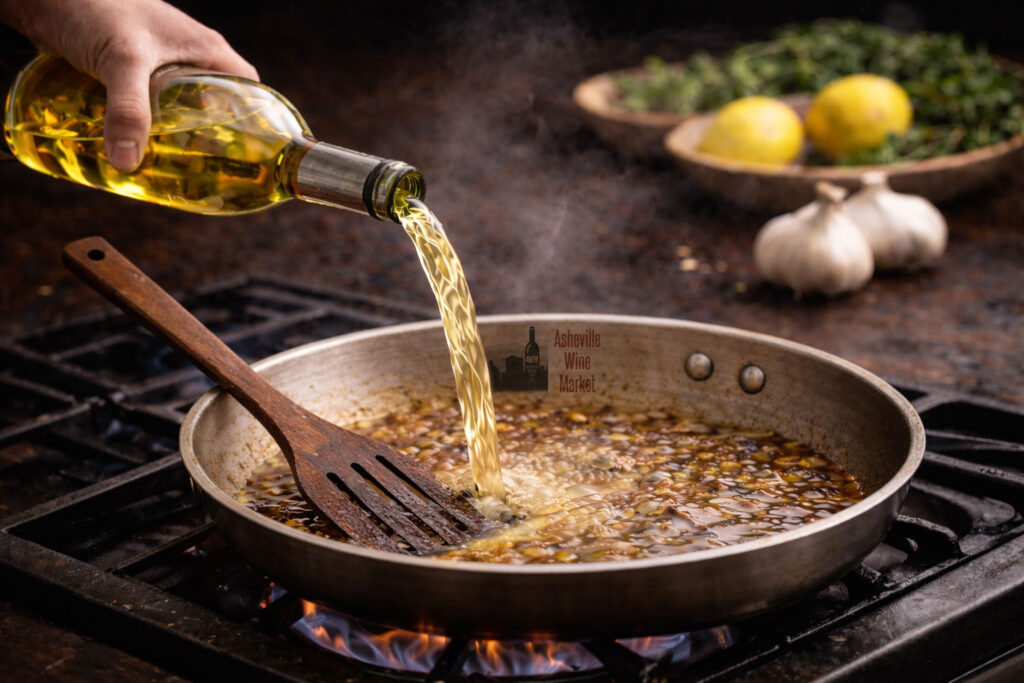
Deglazing
Deglazing is still far and away the number-one reason to cook with wine. When you sear steak, chops, or chicken thighs, or even sauté mushrooms or veggies, you get a toasty-brown layer stuck to the bottom of your pan. Those tasty brown bits are the Maillard reaction, just waiting for a splash of wine to build flavor for you.
When you add that splash of wine to your hot pan and scrape up those tasty bits, a couple of glorious things happen. First off, the wine’s acidity and character lift the whole dish, help adjust the brightness and balance the flavor. Then those beautifully browned bits dissolve into the liquid, becoming the beginning of your sauce. The extra added bonus is that you essentially just cleaned your pan!
Don’t forget about deglazing when you’re using the oven. Whether it’s a sheet pan or roasting pan, deglazing is still your friend for flavor. Roast vegetables or meat until you get some nice golden-brown caramelized bits sticking on the pan, add a splash of wine while the pan is still hot, and scrape up the browned bits. Pour that over your finished creation or use it as a sauce starter.
One practical note for stove top or oven: if your pan is screaming hot, pull it off the heat for a few seconds before adding your wine. It’ll still work perfectly to get all the gorgeous flavor; however, you’ll avoid extra kitchen cleanup from splatter.
Pan Sauces
A pan sauce takes deglazing your pan to the next level. After you scrape up those lovely brown bits, you let the wine reduce a bit, then add your supporting ingredients. Depending on your creation, that could be stock, butter, cream, capers, herbs, or a squeeze of lemon. Pan sauces may seem simple; however, they’re quick, easy, super-flexible, and oh-so-good.
Reductions
While it may seem simple, reductions are a genuinely powerful culinary technique. In its basic form, a reduction is made by just simmering a liquid until it becomes thick and concentrated. Wine works especially well because it brings lift and brightness while adding its own character. You can reduce wine on its own or with stock, a splash of vinegar, some fruit, or strategically chosen aromatics. The alcohol cooks off, and what remains is the flavor.
Most importantly, wine reductions can elevate a dish without turning it into “wine sauce.” A surprisingly small amount of a well-made reduction can deepen lentils, sharpen a roast, or pull a vegetable ragout together. The only real trick is patience. A steady simmer gives you better texture and avoids the bitterness that comes from boiling too hard. Finally, reductions aren’t limited to savory cooking. Sweet wine reductions made with Port, Sherry, or other dessert wines are terrific over baked fruit, ice cream, or simple cakes.
Braising
Braising is all about two deliberate steps: sear well to build flavor, then cook slowly on low heat in a covered pot with wine, stock, and aromatics. This low-and-slow method of cooking is an amazingly efficient way to handle tougher cuts of meat, turning straightforward and generally inexpensive ingredients into something substantial and especially satisfying.
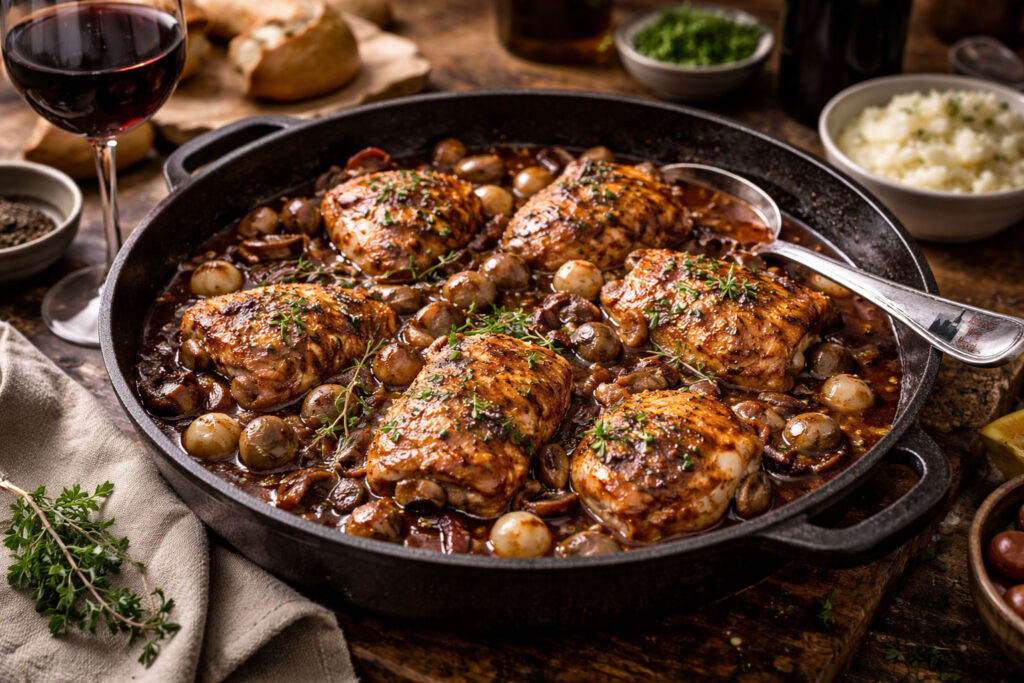
Wine earns its place in a braise by adding flavor and structure while gently tenderizing meats. Classics like beef bourguignon, coq au vin, and osso buco deftly prove this point; however, the same approach works like a champ with pork shoulder, lamb shanks, fennel, cabbage, mushrooms, or beans. If your braise seems muted when you finish, try adjusting brightness before adding salt. A splash of wine vinegar or a squeeze of lemon usually can bring your braise back into balance.
Marinades
Wine is a must‑have ingredient in a good marinade. Much like a braise, the real value of a marinade lies in its near-magical ability to turn inexpensive cuts of meat or sturdy vegetables into something tender and flavorful. Wine brings acidity, aroma, and structure, seasoning and softening simultaneously.
The real fun with marinades begins when you explore the nearly endless variations. You can go Mediterranean with garlic, rosemary, and olive oil; Latin with citrus, oregano, and a little heat; or Asian with soy, ginger, and a splash of seasoned rice vinegar alongside the wine.
My favorite marinade cheat code is using a vacuum sealer. Pulling the air out forces the marinade into the meat or vegetables in minutes instead of hours. Extra bonus is that it’s now ready to drop into your sous-vide.
Poaching
Poaching may conjure images of 1980s country‑club cuisine; however, it remains one of the most underrated ways to use wine in the kitchen. It’s a worthy tool to bust out of your culinary arsenal— It’s gentle, controlled, and remarkably versatile, yielding delicate, nuanced results. Fish takes especially well to a gentle swim in a white wine poach along with herbs and thinly sliced fennel. Poached chicken stays moist and flavorful when cooked slowly in a mix of wine, aromatics, and stock. Even sturdy vegetables, including but nowhere near limited to leeks, fennel, carrots, and Belgian endive, become tender to the bite with beautifully clean, focused flavors.
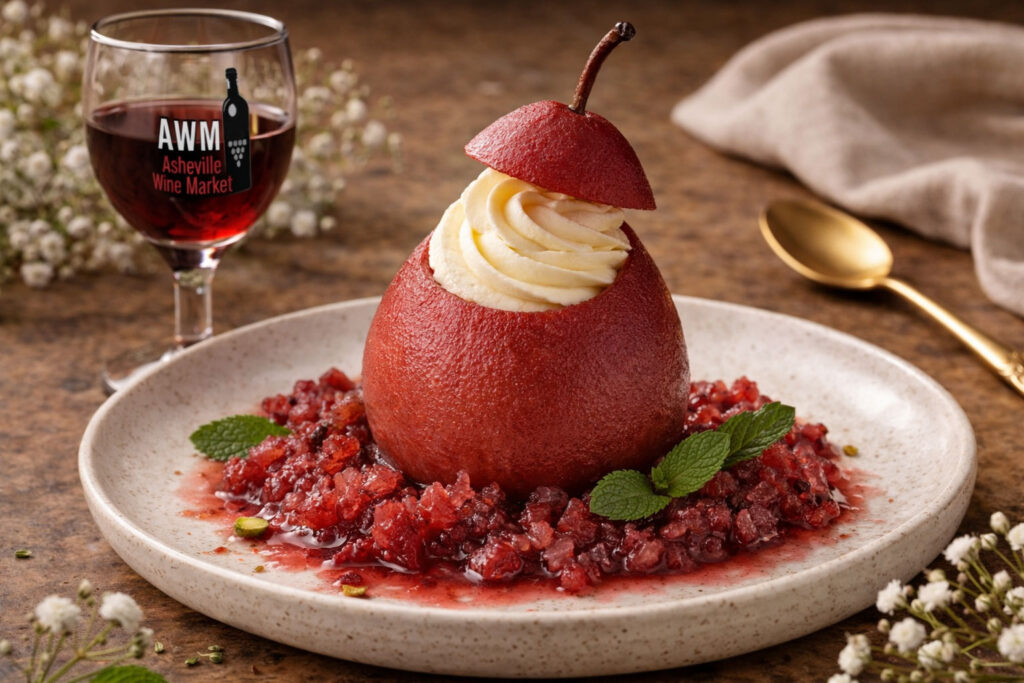
Poaching isn’t limited to savory cooking, and poached fruit desserts can be sublime. Poached pears are my favorite, and when slowly simmered in red or white, they become a foundation for countless classic dessert creations. When you add a little sweetness to the poaching liquid, you get a terrific bonus: the leftover poaching wine reduces beautifully into a sauce, or you can freeze it into a granita, the Italian shaved‑ice dessert that’s infinitely easier to make than it looks.
Rice, Grains, and Beans
Risotto is a great example of how well wine can support your side dishes; however, the same idea applies to far more than Arborio rice. Adding a modest pour to the cooking liquid for grains or legumes brightens the pot, lifts the aromatics, and prevents the heaviness that can develop during long, slow simmering. Farro, barley, lentils, and white beans all benefit from that extra clarity. You’re not aiming for a “wine flavor.” You’re aiming for definition, structure, and a cleaner, balanced taste.
Desserts
Wine isn’t only for savory cooking. Reducing sweet wine into a syrup for baked fruit is an easy win. A splash of sparkling or rosé with berries can be all you need to take your dessert to the next level. Soaking dried fruit in wine for cakes (ok, so Hammond and I have been watching a lot of the British Bake Off lately), bread pudding, or granola is another way to add depth and complexity with practically zero effort.
A few practical suggestions
Cooking with wine isn’t about making everything taste like wine. It’s about using a small, smart amount to bring lift, depth, and complexity to your cooking.
When in doubt, you can always circle back around to the basics: cook with wine you’d happily drink and always avoid heavily oaked bottles, since oak gets bitter and in the way when reduced. Keep an open bottle of white in the fridge so it’s there when you need it (trust me, it will last forever for cooking purposes). If you ever end up with leftover wine, freezing it in small portions makes it easy to grab for sauces and braises later on. Lastly, don’t pour that red down the drain if it’s gotten a little vinegary. It may not be one I’d be tempted to reduce; however, that touch of vinegar vibe will be just fine, and in most cases will add just the right touch of brightness you’re looking for in your creation.
Next time you’re in the shop, tell me what you’ve been cooking—and if you’re new to this, tell me what you want to cook. I’m always up for swapping notes, and I’m happy to help you choose a bottle that makes sense in the pan and in the glass.