
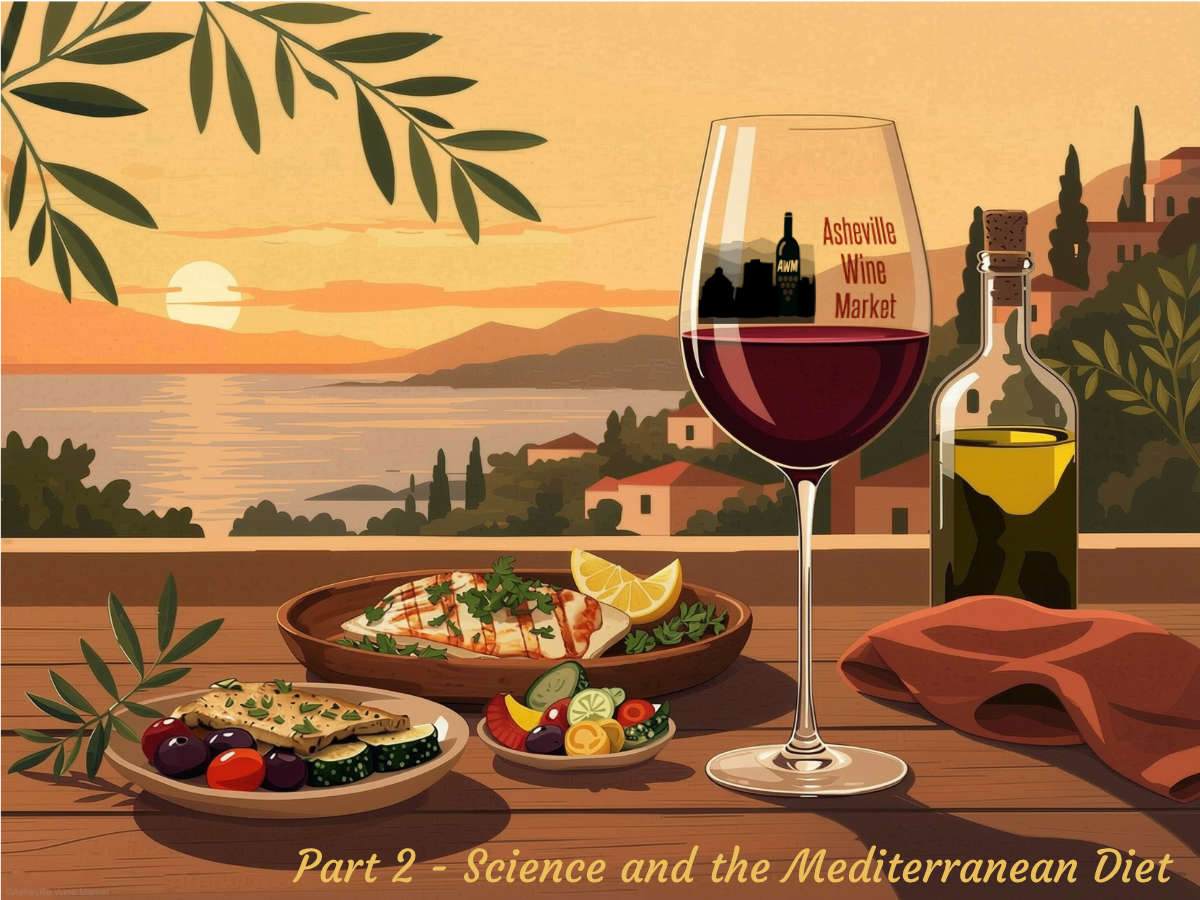
Wine and the Mediterranean Diet: Why the Two Seem to Be Better Together
Last week, I discussed how the mindful approach Hammond and I have settled into lines up almost exactly with a Mediterranean way of enjoying wine. This week we’ll delve deeper into the science behind why it matters.
Most people think of the Mediterranean diet as olive oil, fish, and vegetables, with wine as an afterthought or accessory. Wine has shared the Mediterranean table since the beginning, and it might actually play a significant role in why the diet works as well as it does.
The most significant evidence of this is presented in the newly released results from the PREDIMED trial, one of the most robust research efforts to focus on the Mediterranean diet. The data from the trial found lower cardiovascular disease rates in folks who regularly practiced the Mediterranean diet, with an even greater drop among those who included wine. That’s not just an aside — it’s a well‑designed study pointing to wine as a meaningful contributor.
Why wine specifically? The leading theory centers on the polyphenols found in relatively high concentrations in red wine. Researchers believe these compounds in red wine support heart health much like the other Mediterranean staples. I’m obviously not a biochemist; however, the short version is that wine brings some of the same protective compounds to the table as olive oil and fresh vegetables.
A newer study from March focused on biological aging and found that moderate wine consumption, specifically within the Mediterranean diet guidelines, was associated with slower aging markers in men. It's an early, narrower finding; however, it's exactly the kind of thing that makes me a little more comfortable about pouring that glass with dinner.
Here's the most important bit: these benefits specifically relate to low and moderate consumption levels, and when the wine is enjoyed with food. The real key to the Mediterranean diet is to spread your wine pairings across the whole week, instead of saving up for that one big pour on a Friday or Saturday night. Researchers are crystal clear that moderation isn’t just an option; it's the entire point, and the recommended pattern for enjoyment with the most benefits.
Honestly, after reading the current research, it didn’t seem like a unique revelation. It was more like a validation of something Hammond and I had instinctively been doing for years. A glass with dinner most nights, less wine, but more often. It's nice when the data catches up with one’s lifestyle!
Next week in part three, we’ll look at why wine is different from other adult beverages when it comes to the Mediterranean diet.
In the meantime, if you're interested in a deeper dive into the science, here are the links to the studies I mentioned.
PREDIMED: Does Moderate Wine Intake Within the Mediterranean…
Effects of the Mediterranean diet on aging…
Wine Intake in the Framework of a Mediterranean Diet…
Remember to consult your health care professional for all medical advice.