
As I mentioned last week, for Hammond and me, Damp January is an exercise in balance and moderation. One of the easiest ways to keep things feeling balanced and enjoyable is simply to stretch a bottle across two, three, or even four evenings. These intentionally shorter pours are the key to what Hammond and I like to call mindful moderation.
The good news is that, despite popular opinion and clearly what the wine press would like us to think, well-made wine can certainly hold up nicely past night one, and in most cases even longer. You don’t need a vacuum pump, a gas canister, or a countertop full of gadgets to make that happen. You only need two things: less exposure to oxygen and refrigerated storage.
Once a bottle’s opened, wine starts gradually reacting with oxygen. It’s much like slicing an apple and watching it slowly change over time. With wine, that oxygen doesn’t kill it overnight; however, it does start gently nudging it away from its just-pulled-the-cork condition. It varies from wine to wine—some wines will successfully shrug off this transition for days, while others lose their vinous luster more quickly.
So the elephant in the room is, how long will that open bottle keep? How long a wine lasts depends largely on age and structure. Youthful bottles with bright acidity and a bit of grip are what we’re looking for. Your perfectly cellared, well-aged bottles are, of course, awesome; however, they’ll fade faster and may not fare well into the next day or two. If you’re spacing out your damp evenings or enjoying shorter pours through the week, youthful wines are your friend. Save your perfectly-aged cellar treasures for friend-and family-filled evenings when they’re sure to be finished.
In practice, once you pull the cork on a bottle, the timeline of vinous freshness is pretty simple and happily predictable. With a proper sparkling wine closure, your sparklers can very easily roll into day two or three. Fresh, zippy whites and pinks can stay fresh and lively for days, and we’ve occasionally come across a “lost” bottle in the back of the fridge that still drank like a champ a month later. We find most reds hold up for at least several evenings. Dessert and fortified wines can keep going well past a week.
You don’t need a fancy collection of wine gadgets to make this work. Three basic things will make this work and keep your wine fresh as a daisy. First, re-cork (or screw-cap) what you don’t pour right away. Most times, you can simply reuse the existing cork or screw-cap.
Next, remember your fridge is your friend, even for reds. Refrigeration slows the degradation down dramatically. It will keep young, fresh whites in the “hey, this is just as tasty as yesterday” spot that can last a week or even longer. For well-aged whites from the cellar, the fridge won’t make them immortal; however, it’ll certainly buy you an extra day or so as the lovely tertiary nuances develop. Reds also love the fridge, and it’s perfect for skipping a day or two between your short pours. Simply pour a glass 15–30 minutes before dinner, and it’ll be at the right temperature when you sit down at the table.
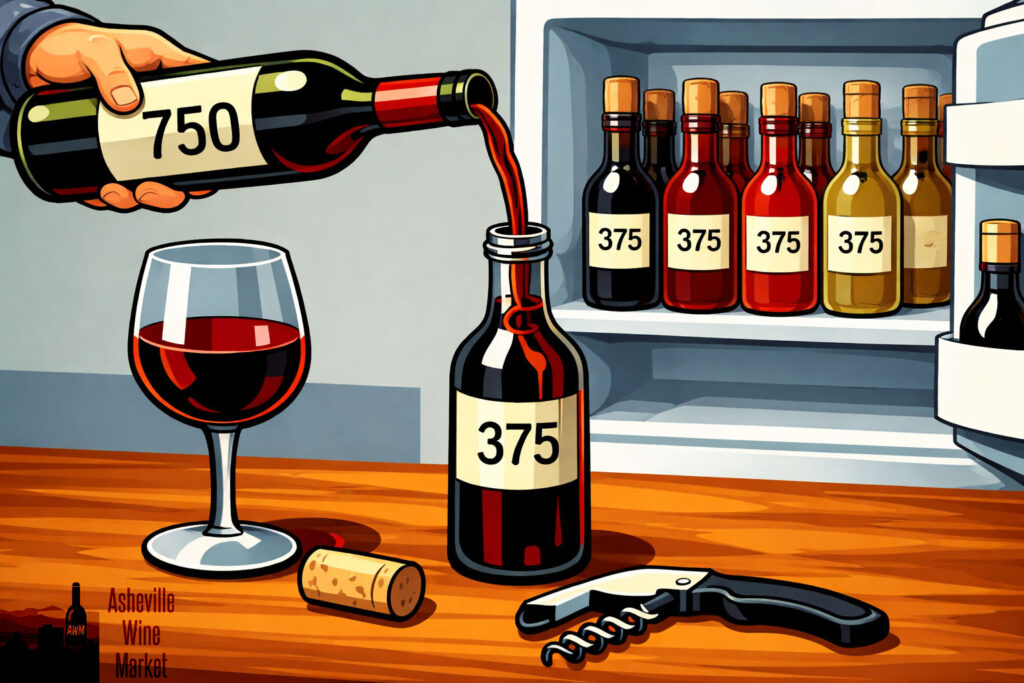
Along with time in the fridge, the best cheat of all is the “half-bottle trick.” When you open a new bottle, immediately pour into a clean half bottle (or any smaller bottle with a thin, tapered neck—oddly enough, some salad dressing bottles are perfect for this) and fill it to the neck, and cap it tightly or re-cork. It may seem like a low-tech solution; however, it’s one of the best Damp January moves you can make—you’ve essentially created an instant “night two” bottle.
Another creative approach is to consider buying wine in alternative formats. It may surprise you to know that top-quality boxed wine can be a viable and practical option. Well-made boxed wine can stay fresh surprisingly well since the bag effectively purges air as you pour. The bonus is that you can very easily moderate your pours without opening a full bottle. Hammond and I love the Sant’ Evasio Barbera box for just this reason.
So what happens if, during your Damp January adventures, a wine slips past its prime, and how do you tell? The easiest way to know if a wine’s past its prime is to trust your senses. Splash a little into your glass, take a swirl and sniff, and taste a small sip. If it leans toward vinegar, feels bruised or browned, or has thinned out since your previous pour, it’s likely on the downslope.
And if you end up with a splash or two that’s not exciting to drink anymore, it can still earn its keep. A splash in a stew, a pan sauce, a braise, or a pot of soup is often the best “last chapter” for leftover wine.
For Hammond and me, this approach checks all the Damp January boxes: mindful moderation that’s easy on the post-holiday budget, while we still get to enjoy a little of our favorite adult beverage with the evening meal.