
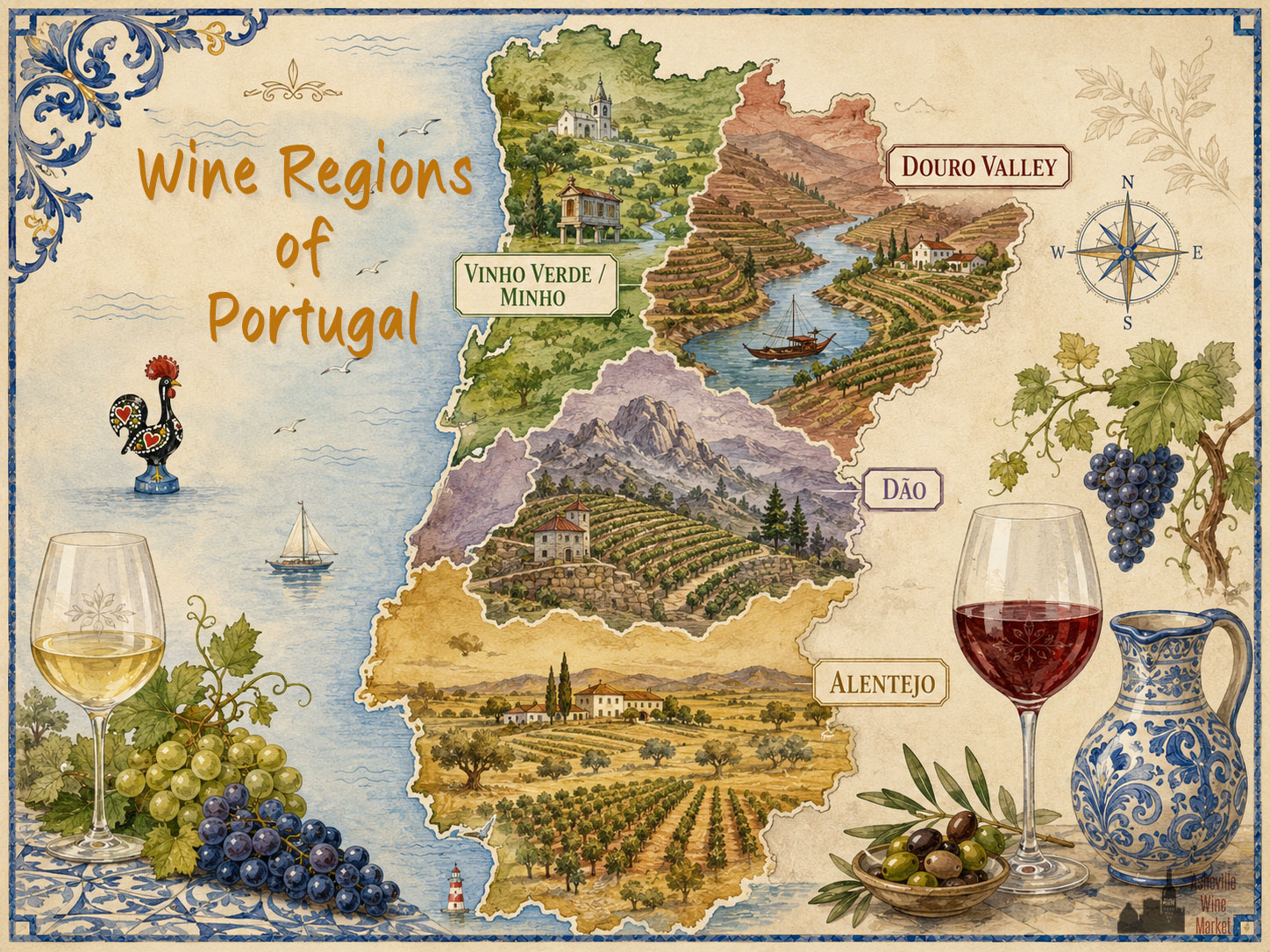
Portugal is roughly the size of Indiana, but within its borders, you’ll find one of the most geographically varied wine landscapes on the planet. The green, wet northwest is cooled by the Atlantic and feels almost Celtic. Travel south and east, and the terrain transforms dramatically into hot, arid plains baking under the Alentejo sun. In between, the Douro Valley cuts through ancient schist mountains, producing wines of brooding intensity. The Dão sits at a higher elevation, sheltered by granite ranges, yielding elegant, mineral-driven reds. This diversity of terroir translates into an extraordinary range of styles: from featherlight, spritzy whites to dense, age-worthy reds, there’s a wine for every palate. Few wine-producing countries pack that much variety into such little space.
The Douro Valley is Portugal’s most famous wine region. It’s one of the most dramatic vineyard landscapes in the world, with steep terraces cut into hillsides along the Douro River. The region built its reputation on Port; however, over the last several decades, dry Douro reds and whites have stepped out of the shadows and into the spotlight.
Duro reds are deep, structured, and built for food, with enough grip to handle roasted meats, stews, mushrooms, lamb, or hard cheeses. The whites are textured, mineral-driven, and surprisingly serious. What I love about the Douro is that even the most affordable bottles are terroir-driven. They simply don’t taste generic.
Travel south to Alentejo, and the wines change along with the warm landscape. Alentejo reds are generous, smooth, and easy to like. While riper and rounder than the Douro, there’s still plenty of freshness. They’re terrific with grilled meats, burgers, pizza, roasted vegetables, sausage, barbecue, weeknight pasta, and cheese boards.
Alentejo is also the region mainly responsible for Portugal’s reputation as a value powerhouse. At the shop, that’s the sweet spot. We’re always looking for bottles that make people say, “Wait, this is how much?” Portugal gives us a lot of those.
Perhaps the most famous Portuguese wine is Vinho Verde, Portugal’s bright, breezy white wine from the cool, rainy Minho region in the northwest. One common misunderstanding is the word “Verde.” It doesn’t mean the wine is green. It refers to the wine being young. These are wines meant to be opened fresh, chilled down, and enjoyed without fuss.
Classic Vinho Verde is light, crisp, often gently spritzy, and usually lower in alcohol. It's a ubiquitous warm-weather favorite that pairs well with seafood, salads, fresh cheeses, fried snacks, spring vegetables, Thai takeout, tacos, picnic food, and pretty much anything involving lemon, herbs, or salt. When Alvarinho is involved in the blend, especially from the best areas, the wines lean a little more grown-up, featuring more depth and texture while still keeping that clean, refreshing edge.
Portugal’s strength is its range. In a country this small, you can move from coastal freshness to mountain structure to sun‑driven richness in a matter of hours. The best part is that this variety and quality come in at supermarket prices. Add a bottle or two to your next case, and you’ll see why they fly off the AWM shelves.