Last week I wrote that wine belongs at the Mediterranean table and then left you hanging on the most important part: which wine.
Here’s the thing. The wine that the Mediterranean diet was built on, a glass you’d actually be handed at a table in Puglia or Provence, isn’t what’s on the shelf of grocery and big-box stores in this country. Years back, the difference between what’s in the grocery stores and a wine shop was often minimal. It isn’t anymore -- far from it!
You’ve heard the term ultra-processed food by now. A category of products stripped of nutrition and rebuilt with additives to hit a target flavor, texture, and shelf life. Wine has its own version.
Industrial winemaking runs on synthetic fermentation aids, color and flavor adjustments, and techniques like reverse osmosis to concentrate flavor or pull out alcohol. None of it’s hidden; it’s just not on the label. Because it doesn’t have to be.
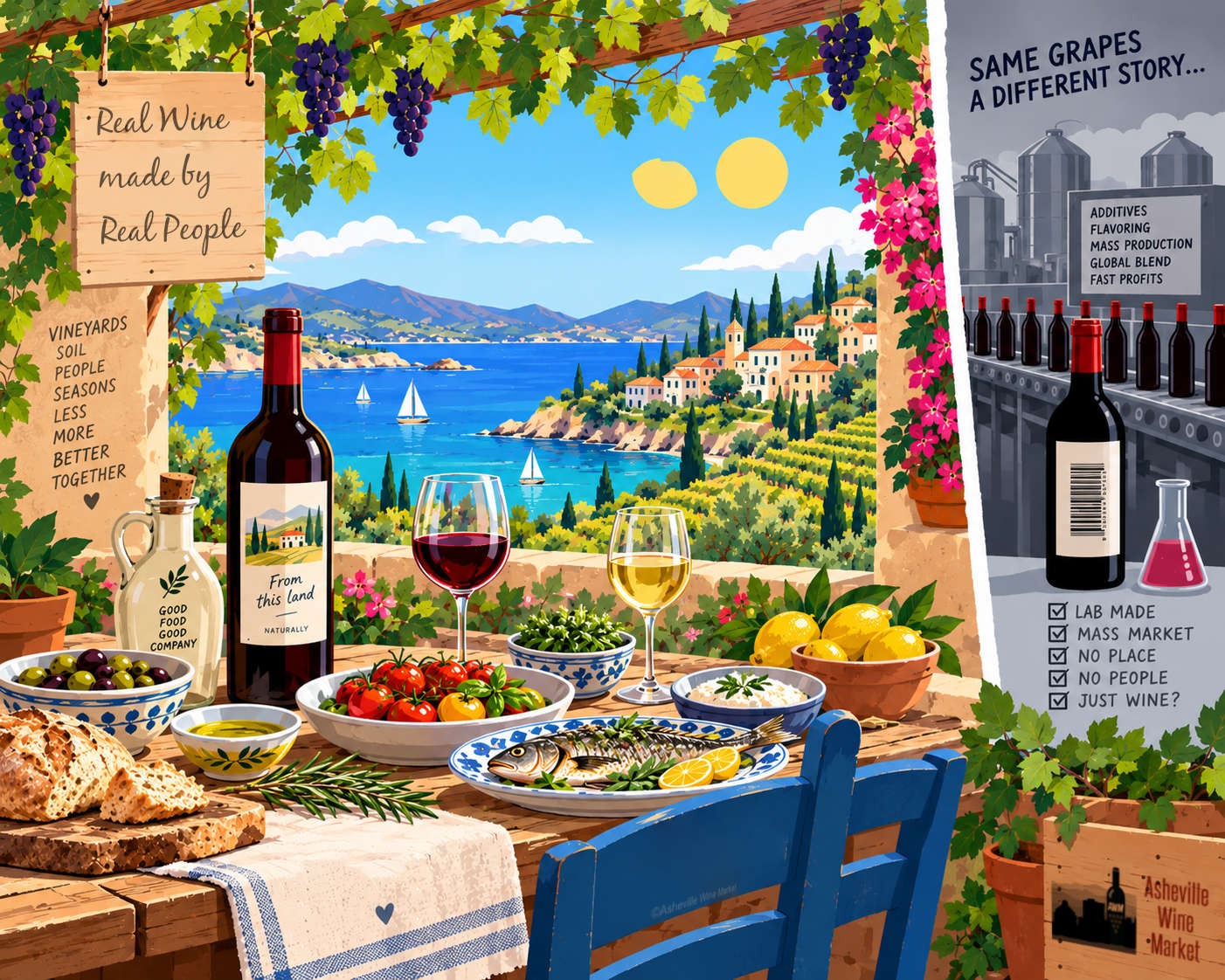
The US has no truth-in-labeling laws. That innocent-looking wine in your big-box store is engineered to taste identical in every bottle, every year, and have a crazy-long shelf life. At the end of the day, that wine has nothing to do with how or where the grapes grew or the people involved.
Yes, it’s still an adult beverage. Same alcohol; however, none of the reasons wine earned its seat at the table in the first place. Calling it part of a healthy diet is like calling a fruit roll-up snack part of a fruit-forward diet just because the wrapper says fruit.
Fortunately, the alternative isn’t complicated. Wine from organically or biodynamically grown grapes made with natural fermentation and zero synthetic intervention tastes like where it came from. It carries the vineyard, the vintage, and the winemaker’s decisions rather than someone in a lab coat with notes on a clipboard.
I do want to be clear that modern technology isn’t the enemy, as plenty of excellent wine is made thoughtfully using modern tools and techniques. It’s also important to note that “natural” on a label doesn't guarantee quality or honesty.
The real issue is transparency. Did the person who grew the grapes also make the wine? The folks in lab coats can tell you all about the additives in the bottle, but I doubt they have a clue how the grapes were grown.
That question goes past what’s in your glass. A grower-producer working their own vineyard has a direct stake in the soil, the biodiversity, and the village’s water. Organic farming isn’t a slogan for them; it’s how the vines and their family survive together. Buying that bottle keeps a small producer working instead of a production line running. It keeps a specific regional tradition alive instead of buying into a marketing slogan.
Real wine made by real people tells you where it’s from because it actually came from somewhere. It wasn’t built to taste like everywhere for everyone.
Finding real wine takes more than grabbing whatever’s at eye level in the supermarket aisle. That’s why a shop like the AWM exists. We curate wine from people who grow their own grapes and make their own wine, rather than stocking the latest shiny object in the marketplace.
AWM Handpicked Selections like Boulon Beaujolais or Château Valflaunes from Jason at Barrique, and Domaine Willy Blanc from Kate at Rise over Run are just a few of the standouts. And happily, we have a shop full of others.
The same logic runs through the rest of the Mediterranean table. Real cold-pressed extra virgin olive oil is well worth the name. It costs more right now than it used to, thanks to drought and a rough few years for Mediterranean harvests, but it’s worth buying over the supermarket version, for the same reason: the right oil beats the cheapest one on the shelf.
The Mediterranean diet was never about restriction. It’s about eating well, staying active, and sitting down with people you like.
Wine belongs in that picture—but only real wine; the kind the Mediterranean tradition was actually built on.