
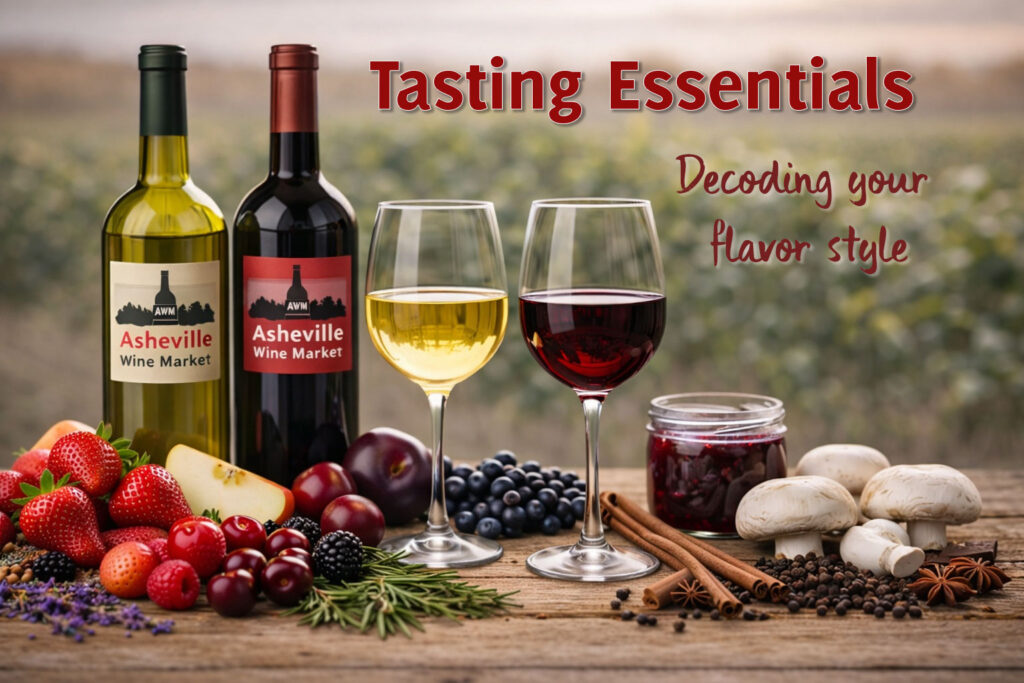
One of the things I love most about wine is the seemingly endless variety of flavors. Some wines taste like you just bit into a perfectly ripe cherry. Others taste more like a warm berry jam or compote. Some can even remind you of sipping cocoa dusted with baking spice. Part four of this series is all about flavor and how you can translate what your taste buds are telling you into words.
In the last three newsletters, we’ve looked at the major building blocks of structure: sweetness, acidity, body, tannin, and texture. We’ve also discussed the importance of aroma in wine, and that elusive idea of “minerality.”
Flavor is where it all comes together, providing the overall impression of a wine as it moves across your palate. It’s what you taste at first sip, how the flavors continue through the middle palate, and what you remember on the finish. Just as in our explorations into aroma and structure, you don’t need perfect descriptors. You can distill it down to a couple of big-picture concepts.
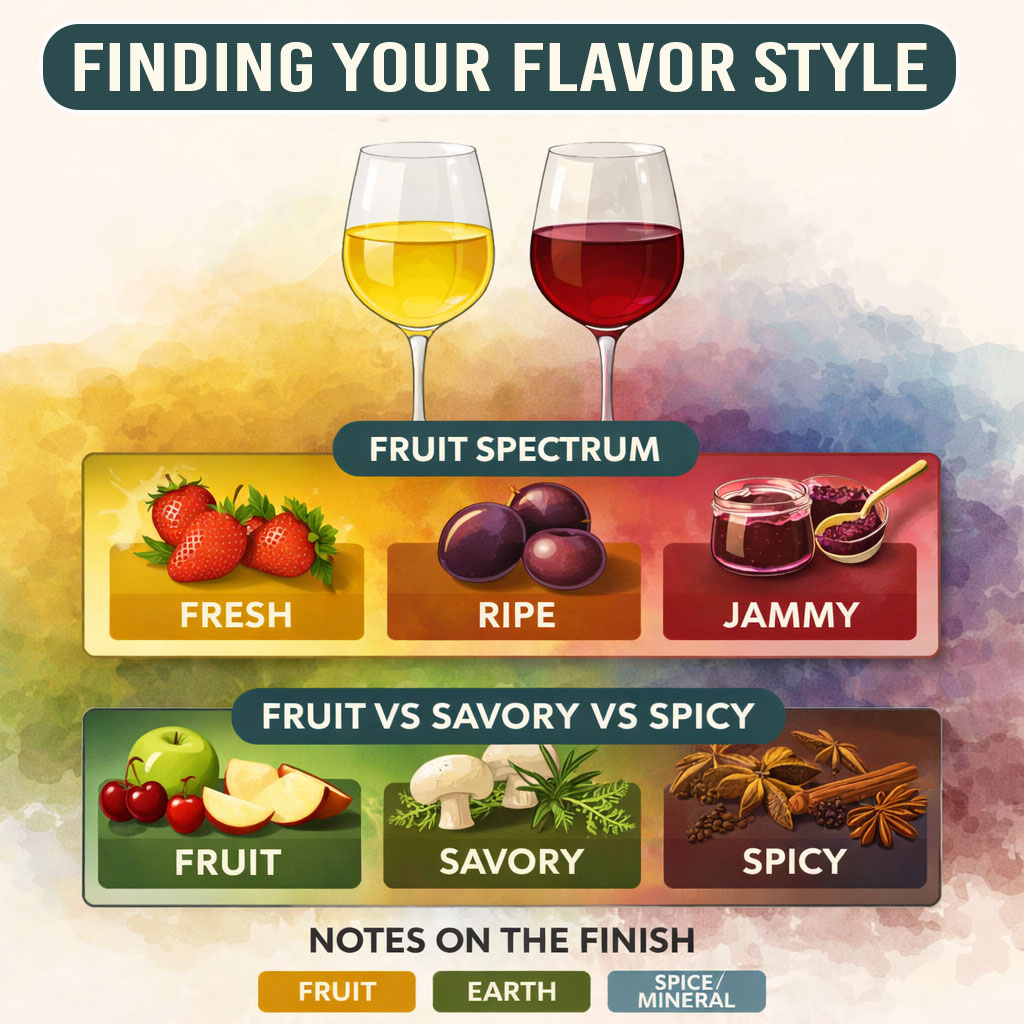
One of the easiest ways to think about flavor is to use a simple, yet surprisingly succinct comparison of fruit styles. You can roughly categorize what’s in your glass with these three descriptors: fresh, ripe, or jammy. “Fresh” fruit is like just‑ripe berries or a crisp apple: bright, crunchy, sometimes even a little tangy. “Ripe” fruit is juicy and generous, what you get in peak peach or plum season. “Jammy” fruit feels denser and more cooked. Think jam, compote, or baked pie filling. Many people lean strongly toward one end of this spectrum without realizing it, and that preference shows up in which wines become their go-to favorites.
A second general, but helpful, comparison is fruit vs. savory vs. spicy. As you might infer, fruit‑forward wines taste mostly like fruit, with very little earth or spice getting in the way. Savory or earthy wines offer nuances that remind people of mushrooms, forest floor, dried leaves, olives, or even a little meatiness. Spicy wines can hint at black pepper, baking spices, cocoa, coffee, or tobacco. The most important takeaway: none of these are better, just different. A pure, fruit‑forward wine might be perfect on a sunny afternoon, while an earthy or spicy one might feel just right with a cozy dinner.
It all wraps up with the finish, and what your mouth remembers 5–10-20, or even 30 seconds later. Does the fruit hang around, or do earth, spice, or a salty, stony minerality take over? Does anything feel slightly bitter (in a good way, like dark chocolate), sweet‑leaning (like perfectly ripe fruit), or almost salty? Paying attention to the finish gives you clues about the wine’s role at the table.
You can start exploring this with a single dry white at home. Take a sip, and ask three quick questions. First: does the fruit feel fresh, ripe, or edging toward jammy? Second: is the overall impression mostly clean and fruity, or do you also notice herbal, mineral, or creamy/buttery notes? Third: on the finish, do you mostly remember citrus, stones, herbs, or something soft and buttery? Now you can write a one‑sentence note that’ll be more useful to you than most back labels.
Next, try the same exercise with a red. Take a sip and ask: am I tasting mostly red fruit (cherry, raspberry, cranberry), black fruit (blackberry, blackcurrant, plum), blue fruit (blueberry), or something in between? Does this feel clean and fruit‑driven, more earthy and savory, or more on the spicy/chocolatey side? When you swallow, what do you remember the most? Fruit, earth, or cocoa, coffee, or spice impression? The point isn’t to be exact; it’s to see which style you enjoy the most, and how you can communicate your preference when you visit the shop again.
Once you’ve done this a few times, you’ll start linking flavor and structure together. A wine with fresh fruit flavors and high acidity will usually feel lively and refreshing, even if it’s red. A wine with riper or jammy fruit and lower acidity will feel cozier, plush, and comforting. Add in tannin and body, and you get clear “types”; a “fresh, crunchy red with bright acidity” lives in a very different place than a “ripe, dark, spicy red with a long, warm finish,” even though they’re equally delicious.
To keep this streamlined, you can use a very simple flavor template whenever you enjoy a glass:
- “This tastes like [fresh/ripe/jammy] [red/black/citrus/stone] fruit
- With [fruit/savory/spicy] flavors
- And the finish leaves me with [fruit/earth/spice/mineral] notes.”
It takes less than a minute to fill in and gives you a record of what your palate actually enjoys. Over time, you’ll notice patterns: maybe you love fresh red fruit and spice, or ripe dark fruit and a bit of earth.
Stop in this Wednesday, 4-7pm, for our Local Roots tasting, and we can guide you through a “flavor flight.” We’ll have bottles open that clearly show different spots on the flavor radar, including one fresher, one riper; one cleaner and fruit‑driven, one more earthy or spicy.
When you taste with these simple questions in mind and jot down a few words, suddenly “I like it” becomes “I love fresh, red‑fruited, spicy wines” or “Give me dark, ripe, earthy reds every time.” It’s the kind of clarity that makes choosing your next bottle fun and easy.