
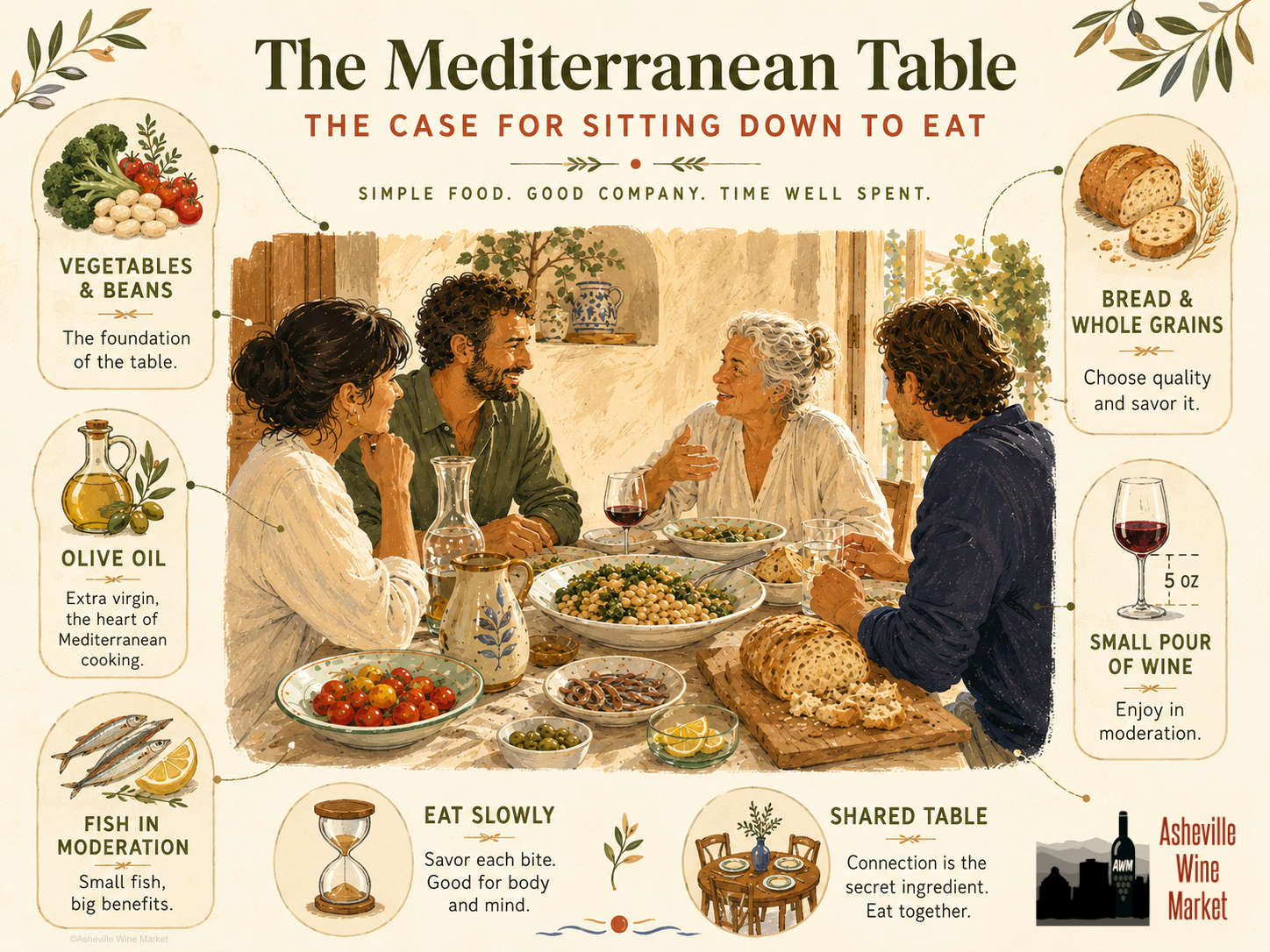
After the last series, a lot of you asked about the Mediterranean diet. Mostly the same two questions: what do I make, and what do I pour with it?
Fair question. It deserves a better answer than just a list of bottles.
Let’s start with the diet itself, which isn't really a diet. It's how people in France, Italy, Spain, and Greece have eaten for generations. It’s a lifestyle choice with simple, tasty cooking that makes healthy eating feel like something you actually want to do. Olive oil, fresh vegetables, herbs, and simple seafood dishes form the backbone of that tradition, and they also happen to pair beautifully with wine. And the other important part of the equation: meals are eaten slowly, with other people.
Decades of research tie this pattern to lower rates of heart disease and metabolic syndrome. But here's the part that doesn't make the headlines: it's just good food that’s simple to cook, cheap to put together, and almost impossible to get tired of.
And it doesn't require a trip to Liguria or Provence—although that certainly wouldn’t be terrible! On a Tuesday, it can be as simple as a can of good beans, a head of broccoli, garlic, a lemon, and more olive oil than seems reasonable. Then perhaps some bread to push it around the plate and some anchovies if you're so inclined. Twenty minutes, one pan, and nobody at the table has to stress about their diet. The expensive part of eating this way isn't the groceries; it's the time and willingness to cook on a weeknight.
Wine has a proper place in that picture. A glass with dinner is part of the same moderation and pleasure of the Mediterranean way of eating. Slow food, tasty wine, good company. It slows the meal down. It gives you a reason to stay in the chair another twenty minutes. It turns eating into something you do with people instead of something you race through standing at the counter. That's the stripped-down mechanics of it, and I think it's a better argument than any antioxidant.
Which brings up the harder question — the one that conveniently gets left out of most articles.
Which wine.
Because the wine that earned its place at the Mediterranean table and a lot of what's sold as wine today are not the same thing. Not even close.
More on that next week.
So this week, I thought I’d share one of my favorite super-easy go-to weeknight fish recipes that leans completely into this spirit of the Med. It’s unfussy, deeply flavorful, and built from ingredients you can find anywhere, and many you may have in your gardens. It’s the kind of meal that turns an ordinary evening into something quite satisfying, especially with a thoughtful glass alongside. It’s also a great way to use up all of those pesky volunteer cherry tomatoes that show up every year.
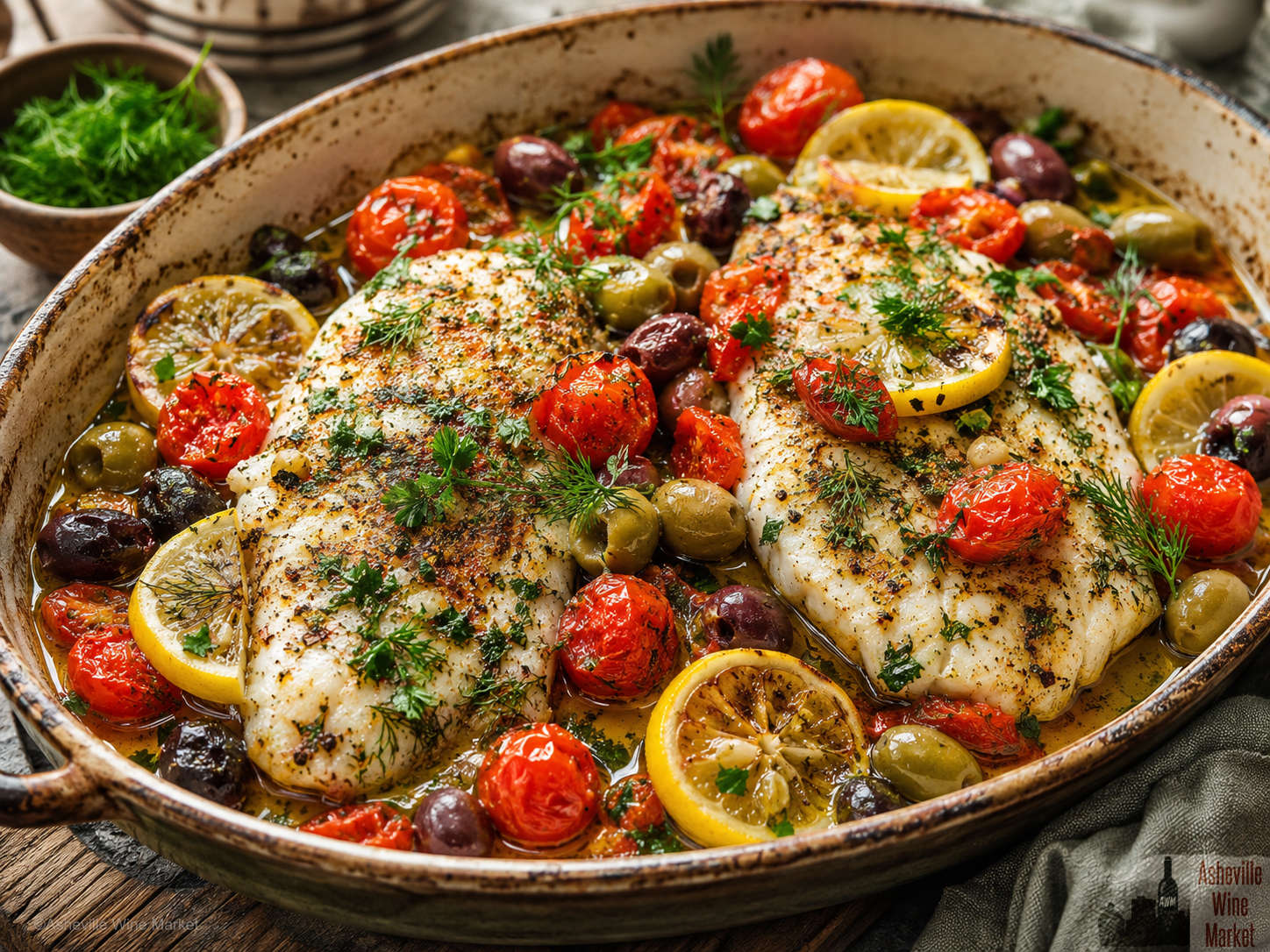
2 white fish fillets (cod, haddock, flounder, or similar)
1/4 cup dry white wine
1 cup cherry tomatoes, halved
1/3 cup mixed olives, Kalamata, green etc., pitted
1 tbsp capers, drained - you can retain a little juice to adjust brightness
2 tbsp extra‑virgin olive oil
2 garlic cloves, finely sliced
1/2 lemon, thinly sliced
1/4 tsp sea salt
1/4 tsp black pepper
1 tsp dried oregano (or 1 tbsp fresh)
Handful fresh parsley, chopped (optional)
-- Preheat your oven to 400°F
-- Place the fish fillets in a small baking dish and season lightly with salt and pepper.
-- Scatter cherry tomatoes, olives, capers, and garlic around and on top of the fish.
-- Drizzle everything generously with olive oil and sprinkle with oregano.
-- Lay the lemon slices over the fish.
-- Bake for 18–20 minutes, or until the fish flakes easily with a fork and the tomatoes have softened.
-- Finish with chopped parsley and an extra squeeze of lemon if you like.
Consider this recipe a simple springboard for nearly endless variations. Feeling like a Tex-Mex vibe? Add taco seasoning and fresh cilantro instead of parsley. You could go full-on French and sub dill, or thyme for the oregano, or go Italian and add basil, and Parmesan Reggiano. Add your favorite ingredients and make it your own.
Let me know if you try it -- and how you made it your own!