
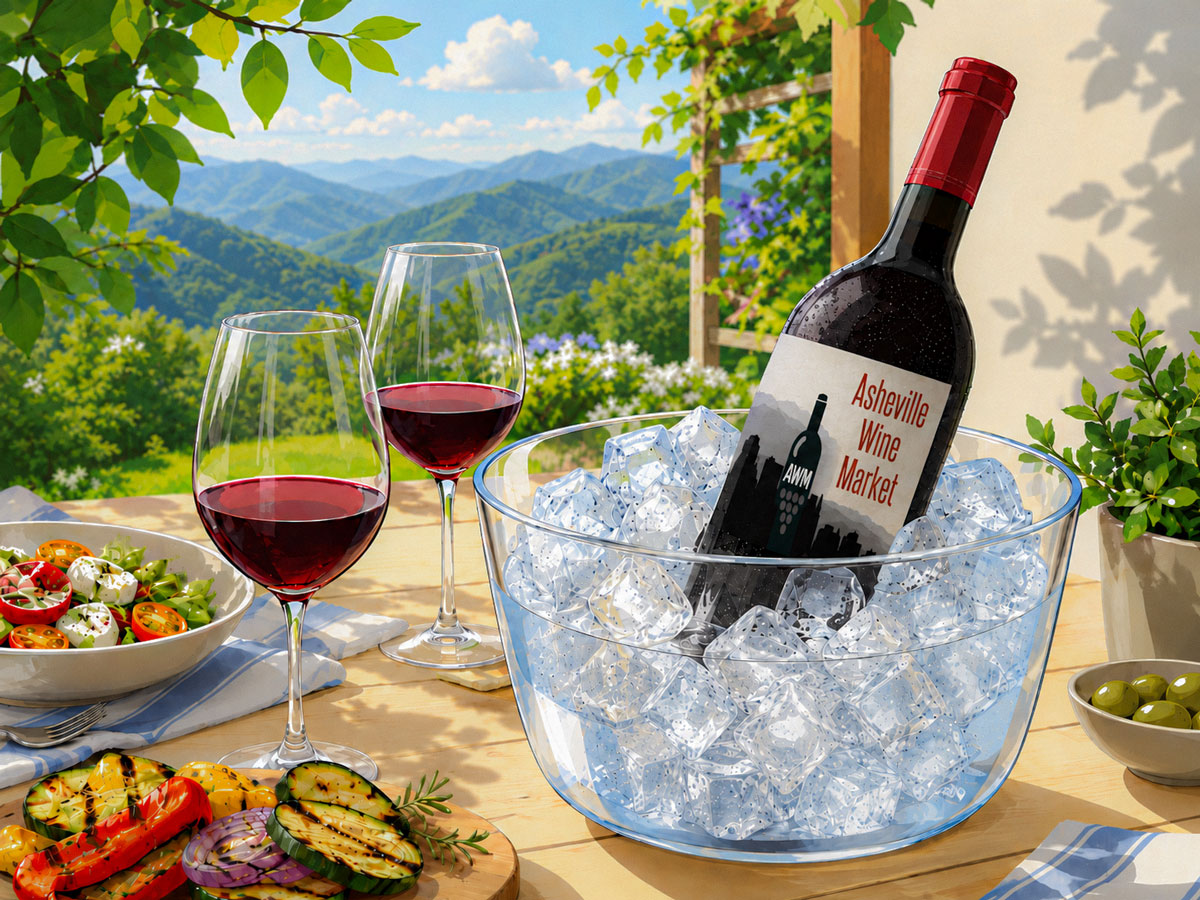
My number-one red wine rule for summer is simple: chill before you pour. Not ice-cold, and not the same way you would chill white or rosé, but just about every red will benefit from a little chill time before it hits the glass. A bottle poured straight from a warm shelf seldom shows its best in the summer months. Give it five or ten minutes in the fridge, or an ice bath, and the same wine can go from dull and flat to bright and fresh, making it much more pleasurable on a hot day.
The old “red wine at room temperature” rule is one of the most misunderstood concepts in wine. The phrase made sense when a bottle came up from a stone cellar; that ended when we parked our wine rack in the kitchen of a climate‑controlled home. Cellar temperature was always in the mid‑50s to low‑60s, a far cry from a kitchen counter or dining room sitting at 72, 75, or even 80 degrees. At those warmer temperatures, the wine’s fruit and acidity fade into the background, while alcohol and tannin punch through, leaving the wine feeling disjointed.
I’ve always thought this was a big reason folks are convinced they don’t enjoy red wine in summer. In most cases, the problem isn’t the wine, it’s the temperature. A warm red can taste dull and alcoholic, even when it is a perfectly good bottle. A slightly chilled red pulls all the elements back into balance. The fruit comes into focus, the acidity feels more refreshing, and the tannins stop taking over the finish. It may seem like a small adjustment, but it can dramatically change your experience.
So here’s the easy-to-remember rule for enjoying red wine in summer: anything sitting at room temperature should'nt go straight into the glass. The bottle on the counter, in your wine rack, the one you just brought home from the shop, they all need a short cool-down first. And if you chill it a little too much, that is easy to fix. Red wine warms up quickly in the glass. A bottle that starts too warm has nowhere useful to go.
You can even fine-tune the rule for your favorite reds. Lighter, brighter, lower-tannin reds can take a deeper chill and often taste better for it. Think Beaujolais, Loire Cabernet Franc, lighter Rhône reds, Schiava, Frappato, some Pinot Noir, and plenty of mountain or coastal reds. Your full-bodied blockbuster favorites need a gentler hand. They still benefit from cooling; however, you don’t want them cold. You want to give them a gentle chill, just enough to bring the wine back into balance.
A great way to experience this for yourself is a quick kitchen-counter experiment somms like to teach in their wine classes. Pour a small glass from a room-temperature bottle. Then put the bottle in an ice-water bath for five minutes and pour a second glass. Put it back for five more minutes and pour a third. Taste all three in order. The warm glass will often feel dull and more alcoholic. The five-minute glass usually tightens up the wine’s balance. The ten-minute glass, especially with a lighter red, will usually be the most refreshing and complete version of the wine.
For everyday use, an ice-water bath is still the fastest and most reliable method. Use a bowl, pot, sink, or wine bucket with ice and water, not just ice. Water surrounds the bottle, cooling it more evenly. A refrigerator is great as well, especially if you remember to put the bottle in 20 to 30 minutes before dinner. For a quick fix, wrap the bottle in a damp kitchen towel or paper towel and put it in the freezer for 15 to 20 minutes. Just remember to set a timer. Forgetting wine in the freezer is a mistake most of us only need to make once.
Lightly chilled reds are a game-changer for your summer pairings. They work beautifully with grilled vegetables, burgers, barbecue, sausages, roast chicken, tomato-based dishes, and richer fish like salmon or tuna. The chill doesn’t change pairing rules; it simply gives the wine a better chance to do its job.
The bottom line: for maximum enjoyment in the summer months, put a slight chill on your reds before serving. Try the five-minute experiment once, and “room temperature red” may never make sense again.